Краска не высохла
15 Июль 2026 | Метки: Maître Parfumeur et Gantier, парфюмированная вода, цветочные ароматы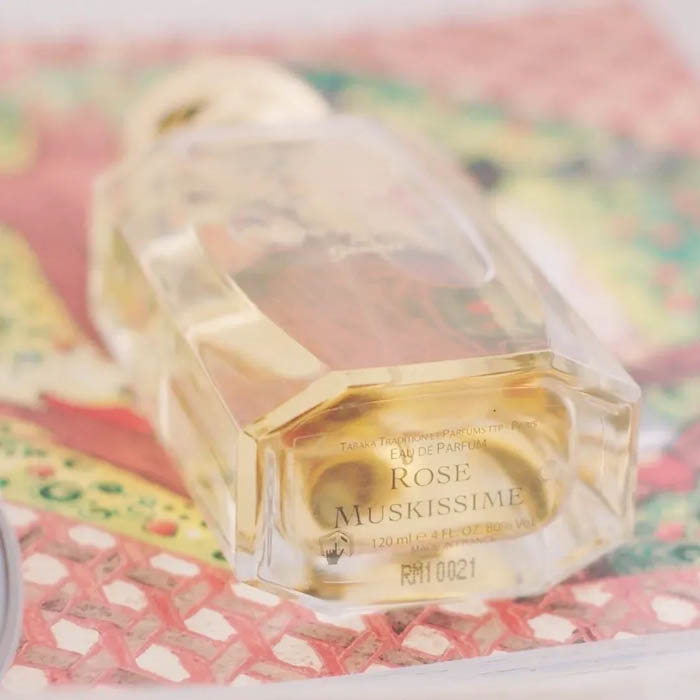
Rose Muskissime (1988) by Maître Parfumeur et Gantier у меня увязалась с образом Марокко, – страны, которую хотелось бы однажды увидеть. То ли из-за аромата перца, который можно ощутить практически сразу после распыления парфюма, то ли благодаря сочным южным фруктам (манго, маракуйя), а возможно, потому, что Жан-Франсуа Лапорт представил свою розу не просто в окружении растительного мускуса, а орошенной множественными капельками воды. Аромат по ощущениям розово-голубой с вкраплениями серого, и голубой здесь подан не широким слоем, как это часто бывает в наши дни, а в форме капель. В общем, Марокко, омываемое водами Атлантического океана и Средиземного моря, в эту концепцию розно-голубого в моем сознании укладывается, а еще путешественники привозят из страны воспоминания о стенах зданий самых разных оттенков синего (Шефшауэн, к примеру, так и называют – голубой жемчужиной). В общем, вы наверняка уже смогли представить, о чем я.
Так вот, роза здесь очень милая. Все при ней: и свежесть, и специи, и гурманские оттенки – но все отмерено как надо, чтобы цветок не превращался в монстра. Розовые лепестки и розовое масло можно бы намазать на “хлеб” – и где-то в середине пути вы понимаете, что здесь пекут лепешки. И подаются они с яблоками, а также с морсом. Но аромат – не про еду, скорее, про краски жизни. Про тот правильный свет, которым хорошие фотографы освещают лучшие стороны предметов.
И вот, куда доходят путники: благоухающие алые и нежно-розовые розы дополнены розами белыми, а также чуть более скромными ирисами и гвоздиками, что в некоторой степени предполагает от нас понимания классической парфюмерии, – а рядом стоят глиняные горшки и кувшины с вином. Летают стрекозы. Жизнь удалась.
The paint hasn’t dried
Rose Muskissime (1988) by Maître Parfumeur et Gantier evokes images of Morocco for me – the country I’d love to visit one day. Perhaps it’s the peppery scent that can be detected almost immediately after spraying the perfume, or the juicy southern fruits (mango, passion fruit), or perhaps it’s because Jean-François Laporte imagined his rose not simply surrounded by vegetal musk, but sprinkled with numerous droplets of water. The scent is pinkish-blue with gray accents, and the blue here isn’t applied in a broad layer, as is often the case these days, but in droplets. In general, Morocco, washed by the waters of the Atlantic Ocean and the Mediterranean Sea, fits this concept of pinkish-blue in my mind, and travelers also bring back memories of building walls in a variety of shades of blue (Chefchaouen, for example, is called the blue pearl). Anyway, you’ve probably already figured out what I’m talking about.
The rose here is absolutely lovely. It’s got everything: freshness, spice, and gourmet undertones – and all that is measured just right, so the flower doesn’t turn into a monster. The rose petals and rose oil could be spread on “bread” – and somewhere halfway through, you realize that flatbreads are baked there. They’re served with apples and currant juice. But the perfume isn’t about food, it’s about the colors of life. About the right light with which good photographers illuminate the best aspects of the objects.
And here’s where the travelers reach: fragrant scarlet and soft pink roses are complemented by white roses, as well as slightly more modest irises and carnations, which requires us to understand classical perfumery at least a little – and clay pots and jugs of wine stand nearby. Dragonflies fly around. Life is good.